REPRESENTINETES OF The Israeli Film Industry Are Redualing Efforts to Caution Against The Wisdom of a PLEDGE SIGNED BY SOME 1,800 Significant Professionals VOWING NOT to Work with to Work with to work with to work with to work with Israeli Film institutions they say are “implicated in genocide and apartheid against the Palestinian People”.
The pledge, announced on mondayWas initially signed by 1,200 film-makers including yorgos lanthimos, Ava duvernay, Asif kapadia, boots riley and joshua oppenheimer; And actors Olivia Colman, Mark Ruffalo, Tilda Swinton, Javier Bardem, Ayo Edebiri, RIZ Ahmed, Josh O’Connor, Cynthia Nixon, Julie Christie, Ilana Glazer, Rebeca Halal, Rebeca Halal, AIMEE LOU WODE And Debra Winger.
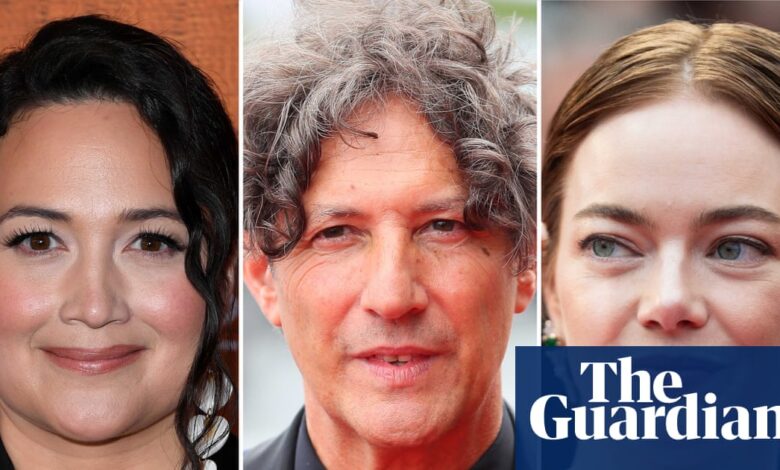
A Further 600 Film Professionals have Joined their number since then, Including Jonathan Glazer, Emma Stone and James Schamus, Peter Sarsgaard and Lily Gladstone.
“As Film-Makers, Actor, Film Industry Workers, And Institutions, We Recognise The Power of Cinema to Shape Perceptions,” The pledge Reads. “In this urgent moment of crisis, where many of our governments are enabling the carnage in gaza, we must do everyTing we can to address complicity in that unrecenting horror.”
But representatives of israeli cinema are not speaking out against the move, which takes inspiration from the cultural boycott that contributed to the end of apartheid in south Africa. In a statement shared with the guardian on tuesday, nadav ben simon, chairman of the israeli screenwriters’ guild, said he found calls to “boycott israeli creators” Deeply Troubleing and counterproductive.
“For Decades, Israeli Creators, Artists, and Storytellers – MySelf Included – Have devoted our work to reflecting the complexity of our reality,” He Wrote. “We have consistently given Voice to Palestinian Narrama, Criticism of Government Policies, and the Diverse Perspectives that Shape Our Society.
“Over the years, we have also also also collaborated with Palestinian Colleagues on Films, Series, and Documents that Seek to Encourage Dialogue, Mutual Undrstanding, PEACE, and An End to Violence.
“Calls to boycott israeli creators Peoples.
The Pledge Commits Signatories Not to Screen Films, AT or otherwise work with what it conscents complicit institutions – Including Festivals, Cinemas, Browedcasters and Production Companies. Examples of Complicity Include “Whitewashing or Justifying Genocide and Apartheid, and/Or or Partnering with the Government Committing Them”.
“We answer the call of Palestinian Film-Makers, Who Have Urged The International Film Industry to Refuse Silence, Racism, and Dehumanization, as Well as to ‘Do Everything Humanly Possible’ to End Complicity in their opption, “The statement reads.
However, Simon counters that He Had His “Fellow Creators” Remain “Steadfast… In the belief that stories are powerful tools for empathy, healing, and Connection. Promote Dialogue and to Strive for An End to Violence and the Achievement of a just and lasting peace for all who live in our region. Return of all the hostages to their homes and familyies.
“In times like these, we as creatures must be devoted to amplifying the light, not deepening the darkness.”
In a later note, Simon Sought to Clarify that “In Israel, There is no such thing as boycotting institutions without affecting creaters. Original Creative Work-Especially in Cinema-Is Supported By Public Funding. Any boycott of israeli institutions are inters and directly a boycott of all israeli creators and israeli artistic output. “
Simon’s Statement was echoed in a separate joint statement sent to the guardian by lor elephant, of the israeli documentary forum, and mrav etrog bar, of the israeli directors guland, who said threats ware beeing Erroneously conflated with representatives of the israeli government.
“Film-Makers in Israel Have Given Voice to Complex Stories, Particularly Regarding The Israeli-Palestinian Conflict, often Including Direct Criticism of State Institutions and AD”
“Many of the films and series, both documentary and narrative, produced in israel have dealt with this subject with sensitivity, fairness, and critical thinking; there thusands of examples of examples of this. White Israeli Film-Makers are not their government, we bear responsibility for its actions and find orselves Caught between a Rock and a hard place: on one side, attempts at silencing from with on International Boycott from Abroad. “
They added: “In addition to the many direct victims, the war in gaza is also Burying International Collections in Israeli Culture and Cinema. The boycott of israeli filmmakers and their words have been found for SOME TIME TIME TIME, and Unfortunately, it is only growing stranger. War, the killing, and the suffering on both sides of the border.
Since publication of the pledge on Monday, the israeli producers association also is issued a statement
“For Decades, We Israeli Artists, Storytellers and Creators have been the primary Voices allowances to hear and witness the Complexity of the Conflict, Including Palestinian Narrathirs and Criticism of Israeli State Policies.
“This call for boycott is profoundly misguided. Silence us. This shortsighted act seeks to eliminate Violence and brings just peace to our region for the benefits of all, “They added.
Meanwhile, Avigail Sperber, An Israeli Film-Maker Celebrated by Her Country’s Government, Wrote on Facebook of her initial horror at the pledge, before reconsidering her response and concluding that the cost to domestic cinema was negligible compared to that of the current conflict.
“The Initial, Natural Response,” [to seeing the Guardian story]She Wrote, “was offense and shock. After all, most of us area opposed to this war and the atrocities in the west bank and gaza. Target? “
Sperber then revgly rejected the producers’ Association’s Subsequent Repodion of the PLEDGE, Because “As long as these atrocities are carried out in our name, we’re not doing enjoying Responsibility is on us, and at a moment I feel helpless, i’m hoping the world successes. Weapons, to recognize a Palestinian State, to break the siege on gaza.
“And yes, our films will be harmed, too. But the cost is worth the chance of ending this bloodshed and starting to heal this bleeding region.”
Sperber then put forward an alternative stance she would prefer her country’s industry bodies to adopt:
“Thank you, dear colleagues Around the world. Thank you for not remaining indifferent to atrocity. will successed in ending this war. “
The Original PLEDGE, Published by the Group Film Workers For Palestine, Says “The Vast Majority of Israeli Film Production and Distribution Companies, SALES AGENTS, Cinemas and Othr Film Instections Hawa Niever Hawate Niever Endersed the full, internationally recognized rights of the Palestinian People ”.
It also notes that there are “a few israeli film entities that are not complicit” and advises following “Guidelines set by Palestinian Civil Society”.
Cinemas in israel currently generate an instimated $ 80M of box office revereneue, with us blockbusters for the next of that sum. The domestic Industry also also drives ticket sales, with period drama soda and thriller highway 65 attraction audiences this year.
Breakout Films that appeal internationally are more scarce but not insignificant. Titles to have attracted praise at film festivals globally include late marriage, turn left at the end of the world and synonyms, nadav lapid’s drama, which von bear in ‘ Years Later, His Followup, Ahed’s Knee, Shared the Jury Prize at Cannes.
In 2011, The Oscar for Best Short Documentary was by israel’s strangers no more, while two years later saw bot the gatekeepers and 5 broken cameras, a palestinian cameras, a Palestinian-French Co-Production, Nominated For Documentary feature.
Meanwhile eran kolirin’s the band’s visit (2007) and Ari Folman’s Waltz with Bashir (2008) Both Attracted Praise from Critics Within Israel and Worldwide.
Notable Names Not to appear on the petition include the directors of No other landThe israeli-paalestinian co-production which documented the forced displacement of Palestinians from their homes in masafer yatta, a region in the evcuble west bank targeted by israeli forces. The film won the Oscar for Best Documentary Earlier this year.
The Guardian has contacted them for comment, as well as other film-makers with names do not appear but who have spoken publicly about the conflict, including Hiam Abbass, Sacha Baron Cohen, SARAN Haas, Natalie Portman, Gal Gadot, Ari Folman and László nemes.
Source link